What Time Does When the Present Is Impossible
A brief reading of how the essay turns physical delay into a philosophical account of lived time, continuity, and protection.
A note from the archive
“No One Lives in the Present” begins with a severe claim: the present is not merely difficult to perceive; an absolute, delay-free now is structurally unavailable to any embodied observer. Signals propagate, neural integration takes time, and experience therefore arrives only after physical events have already been stabilized into a usable record.
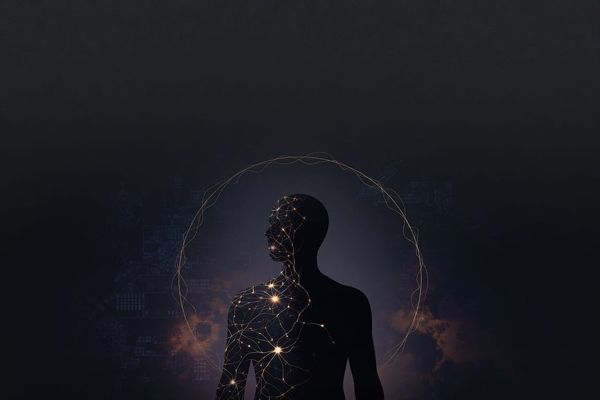
The essay’s distinctive move is to ask what the mind does with that delay. Its answer is the interface: the brain’s functional production of a continuous world and a continuous self. On this account, perceived time is not a clock copied from the universe. It is the form through which an organism converts irreversible physical change into an inhabitable trajectory.
A short passage states the argument clearly:
“We live in the time the interface constructs — to displace the problem of the substrate, to sustain the self.”
This is a philosophical proposal built on several established observations, rather than an experimentally confirmed theory. Thermodynamics describes the energetic cost of maintaining living order. Neuroscience shows that perception and conscious integration are delayed processes. Clinical literature also records altered temporal experience during trauma, depression, pain, and stress. The essay connects these layers by proposing a function for lived time: continuity when the organism is stable, and protection when its integrative capacity is strained.
That distinction matters. Physical delay is the starting condition; the claim that the interface turns delay into lived time is the author’s interpretation. The essay marks that boundary explicitly. It does not present metaphor as measurement, nor does it treat subjective time as cosmological time.
The result is a useful inversion. We usually imagine that consciousness occupies a present supplied by the world. Here, the present is an internal solution to a world that cannot arrive all at once. The self persists because experience is organized as a path with memory behind it and anticipation ahead of it.
Read the complete essay:
https://www.malheirosresearch.com/no-one-lives-in-the-present/
Sidário Rodrigues Malheiros Júnior
Malheiros Medical & Bioengineering Research